
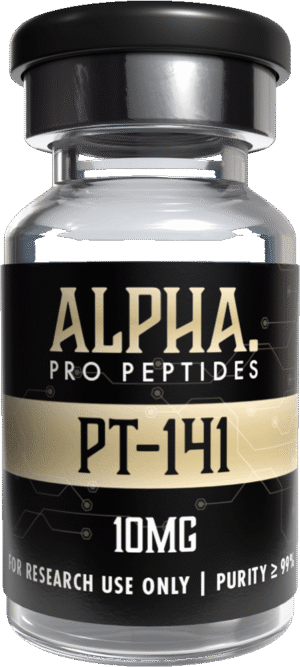
PT-141
Recent research & studies
- Comprehensive characterization of bremelanotide acetate and its degradants by LC-HRMS/MS and predicting epimerization through computational modelling.
Bremelanotide (BRM) is a cyclic peptide therapeutic whose intrinsic stability and degradation behavior have not been extensively investigated. This study aimed to develop a stability-indicating RP-HPLC method for BRM and characterize its degradation products using LC-HRMS/MS combined with computational approaches.…
- Goldilocks-Inspired Design of Mid-Size Macrocycles for Selective Targeting of Human Melanocortin Receptors.
The recent clinical success of macrocyclic peptides, such as bremelanotide and setmelanotide, highlights the potential of this modality as a "Goldilocks" chemical class, effectively balancing the properties of small molecules and biologics while optimizing their affinity, stability, and pharmacokinetics. Despite…
- The Synthetic Melanocortin Agonist NDP-MSH Ameliorates THSD7A-Associated Membranous Nephropathy in an Active Immunization Mouse Model.
Melanocortin-based therapies have demonstrated protective effects in experimental membranous nephropathy (MN). However, existing evidence is derived exclusively from passive immunization models that lack direct involvement of human MN-associated autoimmunity, limiting translational relevance. A clinically relevant model is essential to more…
- Melanotan II (MT-II) as an Adjunct to NB-UVB Phototherapy for Repigmentation in Stable Nonsegmental Vitiligo
This example interventional study record describes a randomized Phase 2 clinical trial evaluating investigational Melanotan II (MT-II) as an adjunct to standard NB-UVB phototherapy for repigmentation in adults with stable nonsegmental vitiligo.
- Single Dose of Vyleesi in Lactating Female Subjects to Measure the Concentration of Bremelanotide in Breast Milk
The primary objectives of this clinical trial performed with Vyleesi (Bremelanotide Injection) are: * to evaluate if Bremelanotide (BMT) is secreted in breast milk of lactating women treated with a single dose of BMT 1.75 mg SC. * to measure…
- Clinical trial evidence on emerging pharmacological therapies for hypoactive sexual desire disorder in women: a systematic review and analysis of completed studies registered on ClinicalTrials.gov.
Background: Hypoactive Sexual Desire Disorder (HSDD) is a prevalent and distressing condition affecting adult women and is associated with significant impairments in quality of life and interpersonal relationships. Despite increasing recognition of female sexual health as a clinical priority, pharmacological…
- Quantification of "Mercy Sex" in Heterosexual Women.
Women with hypoactive sexual desire disorder (HSDD) lack the thoughts, desire, or receptivity to sexual desire, causing personal difficulty and distress (DSM IV-TR). However, HSDD clinical trials evaluating testosterone therapy, flibanserin, and bremelanotide spanning nearly a decade show women with…
- A Phase 2 Study Evaluating the Co-Administration of Bremelanotide With Tirzepatide for the Treatment of Obesity
This is a prospective, randomized, double-blind, placebo-controlled study designed to assess the safety and efficacy of bremelanotide (BMT) used in combination with tirzepatide therapy in the treatment of obesity in subjects with a BMI ranging from 30.0 to 45.0 kg/m2…
- Phase 2a to Evaluate PL-8177 in Subjects with Active Ulcerative Colitis (UC)
The purpose of this study is to compare PL8177 (a melanocortin receptor agonist) to placebo (in a 3:1 ratio-meaning that for every 3 people that get the active drug, one will receive placebo). The study treatment will be for 8…
- A Phase 3, Bridging, Multicenter, Randomized, Double-blind, Placebo-controlled, Parallel-group Trial to Evaluate the Efficacy and Safety of Subcutaneously Administered Bremelanotide in Premenopausal Women With Hypoactive Sexual Desire Disorder (With or Without Decreased Arousal)
The purpose of this study is to Evaluate the Efficacy and Safety of Subcutaneously Administered Bremelanotide in Premenopausal Women with Hypoactive Sexual Desire Disorder(with or without Decreased Arousal).
These are third-party research studies presented for informational purposes. They are not endorsements and do not constitute medical advice or claims about any product.